
The Most Powerful State
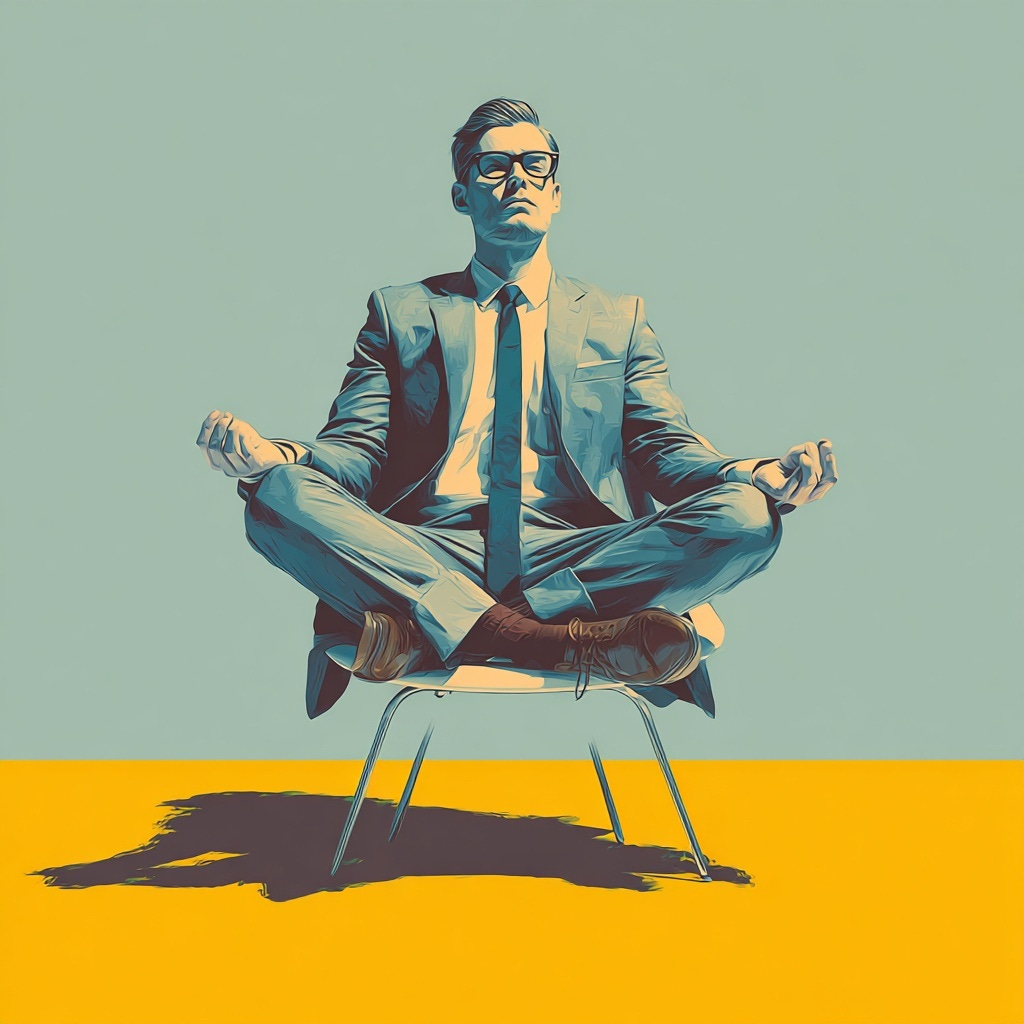
True power is not force but regulated clarity: emotional control, balanced arousal, and disciplined self-mastery that enable wise action, endurance, and long-term strength.


When people speak about power, they usually mean force.
They mean the capacity to impose one’s will. To bend reality. To dominate circumstances. To win conflicts. The language of power is often loud: conquest, disruption, breakthrough, crushing the competition.
But if we step back from the noise of modern culture and return to the deeper traditions of philosophy and the older foundations of science, we encounter a different thesis.
The most powerful state is not aggression.
It is ordered inner stability.
Not passivity. Not weakness. Not withdrawal.
But a condition of disciplined clarity in which force is available yet restrained, energy is present yet governed, and action arises from understanding rather than compulsion.
This claim is not mystical. It is philosophical in the classical sense and conservative in the scientific sense: it rests on ideas that have endured.
I. The Stoic Discovery: Power as Self-Mastery
The Stoics — particularly Epictetus, Seneca, and Marcus Aurelius — argued that the only true domain of control is one’s own judgments and responses.
Epictetus makes the distinction clearly: some things are within our control, others are not. Confusion between the two produces suffering and weakness.
For the Stoics, power was not the ability to command events but the ability to remain undisturbed by them.
This is not mere moralism. It is a practical psychology. When the mind is enslaved to external outcomes — praise, profit, status, victory — it becomes reactive. Reactivity narrows perception. Narrow perception degrades judgment.
The Stoic sage is not apathetic. He is composed. His energy is conserved because it is not constantly leaking into resentment or fear.
In modern terms, this resembles what psychology would later call emotional regulation and cognitive reframing. But the Stoics arrived there without neuroscience.
They observed.
They saw that those who could not govern themselves were governed by events.
And that is the opposite of power.
II. Aristotle and the Doctrine of the Mean
Aristotle described virtue not as extremity but as balance — the mean between deficiency and excess.
Courage lies between cowardice and recklessness.
Temperance lies between indulgence and numbness.
Excessive aggression is not strength; it is imbalance.
Aristotle’s framework anticipates a finding that psychology would formally articulate two millennia later: optimal functioning lies in regulated arousal, not maximum intensity.
The person perpetually at peak emotional activation cannot deliberate clearly. The person perpetually detached cannot act decisively.
Power is not at the extremes. It is in the calibrated middle.
Aristotle would likely describe the most powerful state as one in which reason (logos) governs appetite and impulse without suppressing them entirely.
Energy must be present — but harmonized.
III. Spinoza: Freedom Through Understanding
Baruch Spinoza approached power from a different angle. In his Ethics, he argued that human bondage consists in being driven by passive emotions — affects that arise from external causes we do not understand.
Freedom, for Spinoza, is not free will in a metaphysical sense. It is understanding the causal structure of one’s emotions so that one becomes an active cause rather than a passive effect.
In modern language: the more you comprehend the mechanisms of your reactions, the less they control you.
Spinoza’s “intellectual love of God” can be read not as theology but as alignment with the order of nature. The individual who understands reality does not fight it blindly. He acts within its constraints intelligently.
Aggression without understanding is collision.
Understanding without agitation is leverage.
IV. The Buddhist Parallel: Non-Attachment and Clarity
Although emerging from a different metaphysical tradition, early Buddhist psychology — particularly as articulated in the Pali Canon — identifies craving (tanha) as the source of suffering and confusion.
The agitated mind grasps.
The grasping mind distorts.
The distorted mind misperceives.
This chain resembles what cognitive science now describes as attentional narrowing under stress. When we cling to an outcome, perception becomes biased toward confirming or securing it.
The disciplined practice of equanimity is not indifference. It is perceptual stabilization.
Clarity requires non-compulsion.
This is a psychological observation, not a religious demand.
V. Darwin, Evolution, and Regulated Adaptation
Charles Darwin never framed his theory as a moral philosophy, but its implications are clear.
Species survive not because they are the most aggressive, but because they are the most adaptable.
Adaptation requires:
flexible behavior
energy conservation
cooperative capacity
delayed gratification
Constant fight-or-flight physiology is metabolically unsustainable. Organisms that remain in chronic hyper-arousal deteriorate.
Long-term survival selects for regulatory systems.
The nervous system evolved not to maximize intensity but to modulate it.
That is power at the biological level: the ability to shift states appropriately.
VI. William James and the Economy of Attention
In the late 19th century, William James described attention as the essence of will.
“What we attend to becomes our reality.”
But attention is finite. A mind consumed by agitation squanders it. James observed that effortful control of attention — bringing it back deliberately — constitutes a form of moral strength.
Modern neuroscience confirms that executive control networks in the prefrontal cortex function best under moderate arousal. Extreme stress impairs them.
The ability to sustain attention calmly is more powerful than bursts of frantic activity.
VII. Nietzsche and the Misunderstanding of Will to Power
Friedrich Nietzsche is often misinterpreted as glorifying domination. But the deeper reading suggests something subtler.
The “will to power” is not mere control over others. It is self-overcoming — the transformation of reactive impulses into creative force.
The highest type, for Nietzsche, is not the tyrant but the individual who shapes himself.
Reactive aggression is ressentiment — a symptom of weakness.
Creative discipline is strength.
Even in Nietzsche’s radical framework, the most powerful state is generative, not explosive.
VIII. Freud, Jung, and Integration
Early depth psychology adds another dimension.
Sigmund Freud described the ego as mediating between instinct and reality. When overwhelmed by impulse, the ego fragments.
Carl Jung later emphasized individuation — integration of unconscious forces into conscious awareness.
Both models imply the same structure: fragmentation is weakness; integration is power.
The person ruled by unconscious drives reacts compulsively. The integrated individual acts intentionally.
IX. The Science of Regulation
Modern physiology confirms what these thinkers intuited.
The autonomic nervous system balances sympathetic activation (mobilization) and parasympathetic activation (restoration). Long-term health and cognitive performance correlate with flexible regulation between these states.
Chronic hyperactivation leads to:
impaired executive function
reduced immune performance
impulsive decision-making
Measured calmness correlates with:
improved working memory
greater problem-solving capacity
better long-term outcomes
The evidence is not speculative. It is conservative and repeatedly replicated.
Optimal performance follows the inverted U-shaped relationship between arousal and effectiveness first described by Robert Yerkes and John Dillingham Dodson in 1908.
Excess intensity degrades performance.
Moderated intensity enhances it.
X. The Illusion of Visible Power
Why then does force still appear dominant?
Because it is theatrical.
Calm competence is less dramatic than fury.
Stability does not announce itself.
Regulation does not trend on social media.
But over time, systems governed by volatility destabilize.
Empires collapse not from insufficient aggression but from internal disorder.
Organizations fail not from insufficient intensity but from accumulated unforced errors.
Individuals burn out not from insufficient ambition but from chronic dysregulation.
The invisible advantage is endurance.
XI. Defining the Most Powerful State
From philosophy and science combined, the most powerful state can be described as:
Inner governance over impulse
Stable but responsive physiology
Cognitive flexibility
Emotional equanimity
Long-term orientation
Capacity for decisive action without compulsion
It is a state in which energy is available but not spilling.
A state in which one can act — or refrain from acting — without being forced by fear, anger, or craving.
The powerful person is not the one who cannot be provoked.
It is the one who can be provoked and yet remains sovereign.
XII. Final Reflection
The ancient philosophers called it virtue.
The Stoics called it apatheia.
Spinoza called it freedom.
Buddhist psychology calls it equanimity.
Modern science calls it regulation.
Different vocabularies, same structure.
The most powerful state is not the maximization of force.
It is mastery over force.
And mastery is quiet.
It does not need to prove itself in constant motion.
It endures.
 | A guest post by
|