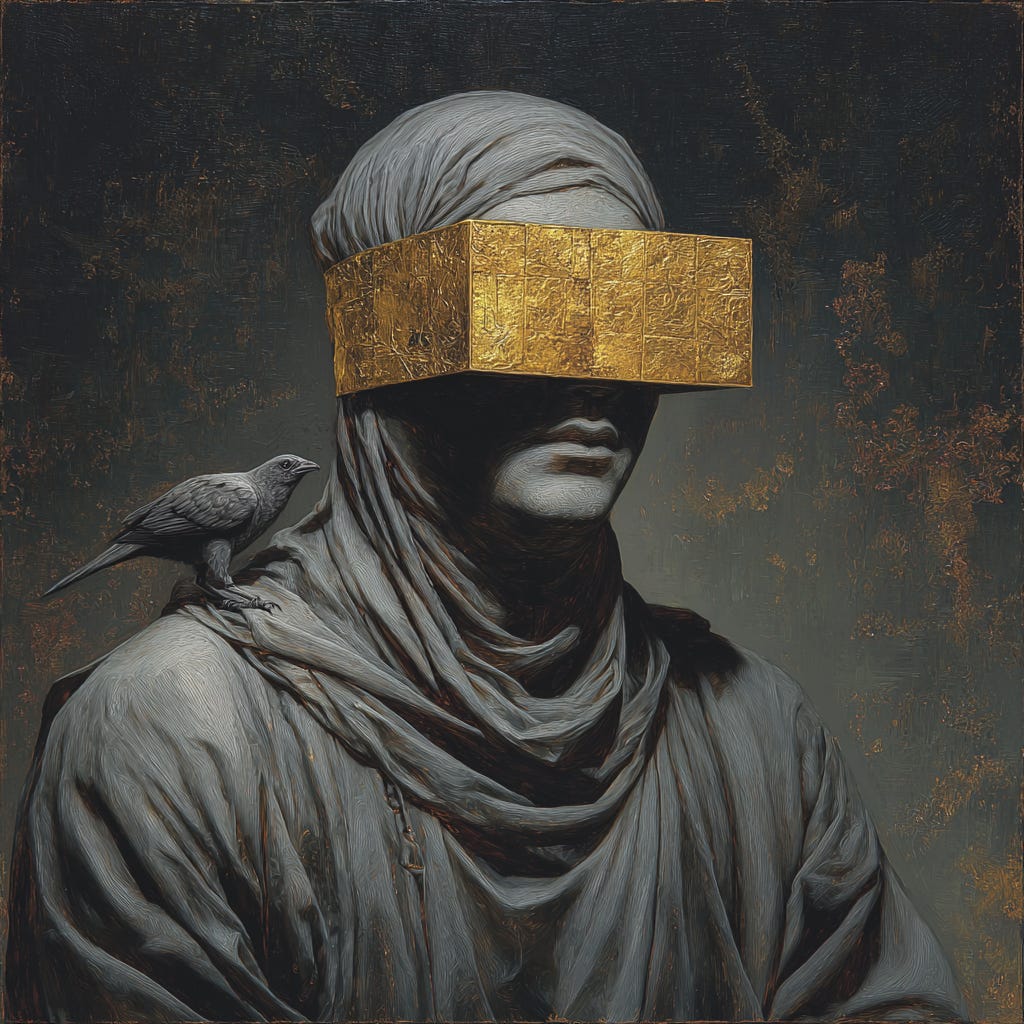
In Czechia, there’s an unwritten rule: don’t get involved. If something’s broken, someone else will fix it. Or more likely, it won’t get fixed at all, and that’s just how things are. The default stance toward public problems isn’t outrage—it’s resignation. Not because people don’t care, but because they’ve been trained not to.
What’s strange is that this passivity often wears the mask of virtue. People will tell you, “Don’t be arrogant,” or “It’s not your place,” or “Just stay humble.” As if humility were about pretending the world’s problems are someone else’s business. It sounds like wisdom. But it’s actually a virus—a leftover from the communist era that still infects the culture.
And like any virus that weakens the immune system, this one makes democracy sick.
Ghosts of a Dead Regime
Under communism, taking initiative was dangerous. The system punished ambition that didn’t come from the top. People learned that the safest path was to stay quiet and mind their own business. Don’t question authority. Don’t volunteer to fix anything. Just survive.
That system died decades ago, but the habits stuck. You still hear people say things like, “To je jejich věc”—“That’s their thing.” Whether it’s politics, infrastructure, corruption, or bureaucracy, the logic is the same: if it’s not explicitly your job, don’t touch it. That’s for them—whoever they are.
This creates a strange vacuum. Everyone knows the roof is leaking, but no one gets the ladder because fixing roofs is “not their place.”
The Cult of Non-Involvement
On the surface, this mindset seems civilized. It’s non-confrontational. Respectful. Humble. But real humility doesn’t mean staying silent. It means doing difficult things even when you’re not sure you’ll succeed. It means showing up, not stepping back.
The Czech version of humility has become a cover story—a way to avoid responsibility without admitting it. Worse, it gives people a false sense of virtue. If you speak up, you’re the arrogant one. If you act, you’re showing off. In this upside-down morality, disengagement is treated as a kind of quiet nobility.
It’s not.
Democracy Without Feedback
A healthy democracy depends on citizen feedback. When things break, someone has to say, “This isn’t working.” Someone has to fix it. But if no one takes responsibility—because they think it’s not their place—the system doesn’t just stall. It decays.
You end up with a democracy on paper, but not in practice. The form is there, but the function is gone. People vote, but they don’t believe it changes anything. They see corruption, but don’t call it out. They expect failure, and over time, that expectation becomes self-fulfilling.
This is how democratic regimes rot—from inside, from silence.
Compare and Contrast
In the U.S., everyone thinks they could run the city better than the mayor. It’s ridiculous, and often annoying—but it keeps the civic engine running. In Scandinavia, civic involvement is seen as a duty, not a disruption. In Czechia, people still whisper when they criticize authority. Not because they’re afraid of jail anymore, but because the habit of deference is hard to break.
There’s a whole generation who learned not to care in public. And they passed that lesson down, unintentionally, to the next one. Not with fear, but with indifference. That’s more dangerous. Fear can be resisted. Indifference just settles in.
What We Actually Need
What Czech society needs isn’t more rules or better politicians. It needs a reboot in how people think about responsibility. That means ditching the inherited idea that civic engagement is someone else’s job.
We need a new kind of humility. One that doesn’t say, “Who am I to fix this?” but rather, “Why not me?” One that recognizes that speaking up isn’t arrogance—it’s participation. That involvement isn’t meddling—it’s maintenance.
Real humility is showing up even when you doubt your own importance. Because what democracy really needs isn’t heroes. It’s caretakers.
Talk Back to the Ghost
The old regime is gone. But its ghost lingers—not in our laws, but in our instincts. If we want to keep our democracy, we have to learn to talk back to that ghost. To say, out loud, “This is my business.”
Because if no one takes responsibility, then no one can fix anything. And if no one can fix anything, we’ll get exactly the country we deserve.
Quietly broken.