Believing sounds easy. But it’s actually one of the hardest things you can do.
Because to believe — really believe — is to stop waiting. To stop asking if you’re enough. To stop outsourcing your judgment. And that is something almost no one is trained to do.
In fact, most of us are trained out of it.
From the beginning, the world gives you one core message, repeated a thousand different ways: You are not quite enough yet. You’re smart, sure — but not certified. You’re talented — but not an expert. You have ideas — but no platform. Better wait. Better prepare. Better get a few more opinions first.
This is not abuse. It’s just how the system keeps itself safe. And over time, it works. You become cautious. You second-guess. You stop acting without a reason you can explain. And belief — that raw, personal kind of certainty — gets replaced by strategy.
You stop doing what feels right.
You start doing what feels justifiable.
The Culture of “Not Yet”
We live in a culture of permanent deferral. A culture that never explicitly tells you “no,” but constantly tells you “not yet.”
We call it professionalism. Or maturity. Or realism. We mistake doubt for intelligence. We call fear by names like caution and responsibility. And we praise people not for what they build, but for how carefully they avoid stepping out of line.
Even ambition gets domesticated. Instead of asking what you truly want to build or become, you learn to ask: what kind of success will be easiest to explain to others?
The result? Millions of capable people, half-switched-on, waiting for permission that never comes.
Belief gets reduced to theater. To slogans, campaigns, TED talks. But actual belief — the kind that drives a person to build something no one understands yet — is quietly filtered out.
Not because society hates it. But because society doesn’t know what to do with it.
Belief Is Work
Real belief isn’t a feeling. It’s a kind of sustained creative labor.
You don’t just believe and then succeed. You believe and then spend months — or years — trying to make that belief real in the world. You stay with it through awkwardness, contradiction, and silence. You try things that don’t work. You double back. You doubt yourself. And then you return — not because someone told you to, but because belief lives deeper than doubt.
That’s what makes it so powerful. But also so rare.
Because to believe is to commit — not to a fantasy, but to a problem you don’t fully understand yet. It means deciding to hold something — an idea, a vision, a possibility — and refusing to let it go, even when it makes you look foolish, or alone.
Most people never get the chance. Not because they’re incapable, but because their environment is designed to suppress that kind of risk.
We train people to conform, not to build. We reward polish, not persistence. We tolerate original thinkers only after they succeed — and sometimes not even then.
That’s why it’s hard to believe. Because belief is something you have to build alone, in the dark, before anyone is asking for it.
And you have to keep building long after the applause has stopped.
The Political Consequences
This isn’t just a personal problem. It’s a political one. Because the strength of a democracy is not just in its rules or its institutions — it’s in its people. And if those people no longer believe in their own agency, the whole system slowly rots from the inside out.
Democracy only works when individuals act as if they matter.
When they step into problems they weren’t assigned. When they build institutions no one asked for. When they speak truths that haven’t been authorized yet. That’s what citizenship really is: not just voting, but building the kind of world you’d want to vote for.
And that requires belief. Not just belief in systems, or belief in leaders. Belief in yourself. The belief that your actions — however small — are part of history. That your role is not just to observe, but to shape.
And here’s the hard part: that kind of belief is exactly what our culture erodes. It tells you that everything important is already being handled. That there are experts. That there are institutions. That someone, somewhere, is in charge.
Until they’re not. Until the moment comes when the system buckles — and suddenly, it’s up to you.
And if by then you’ve forgotten how to act without permission, it’s already too late.
What Europe Needs Now
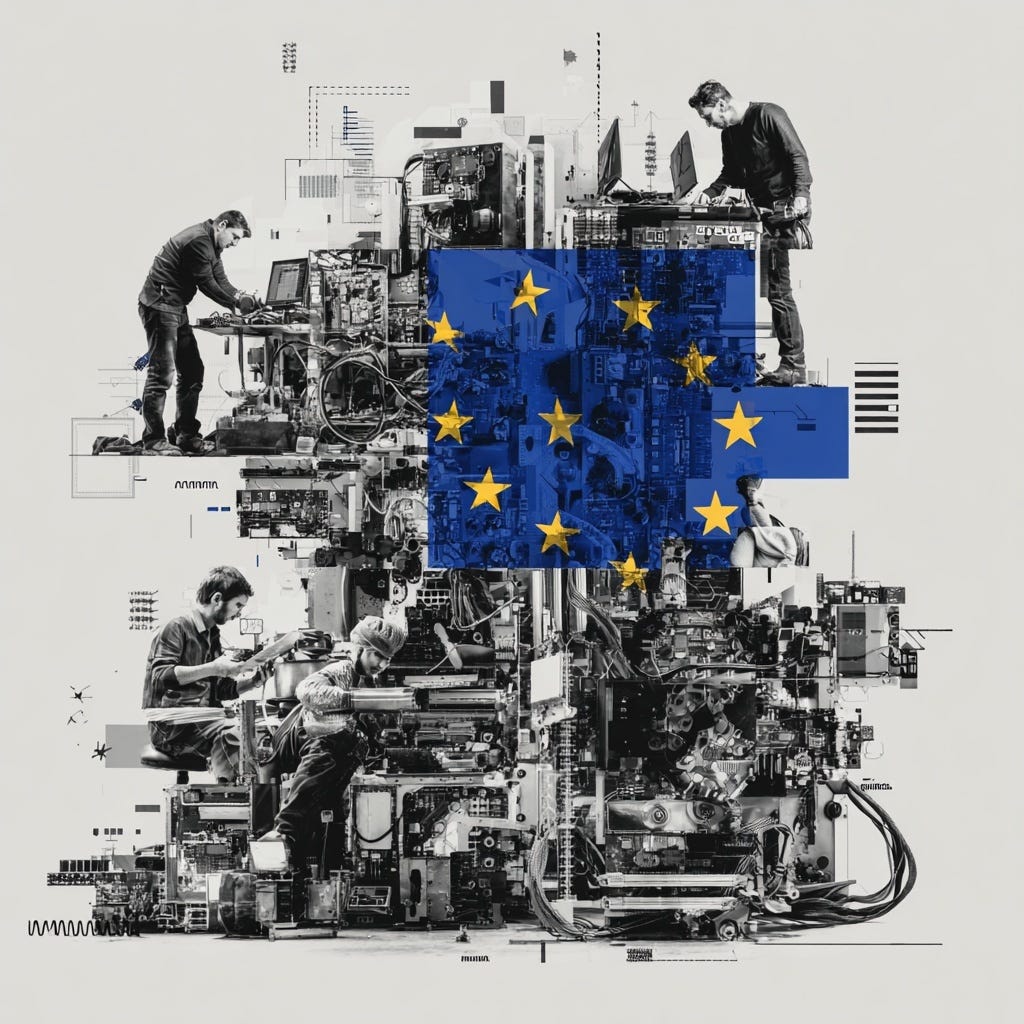
Europe today doesn’t lack institutions. It lacks individuals who believe they can matter.
It’s not that we don’t have the talent. Or the intelligence. Or the technology. What we lack is cultural permission. We don’t make room for builders, creators, doers. We raise them to doubt. We ask them to explain themselves endlessly. And when they stop asking for permission, we call them arrogant, naive, “American.”
But Europe won’t survive on critique alone. If we want to preserve democracy — let alone improve it — we need people willing to act. Not just vote or comment or resist. But build.
We need people who see what’s missing and start creating it. Who act not because they’re told to, but because they feel responsible. People who don’t need everyone to agree with them before they begin.
We need people who believe — not just in the system, but in their own power to shape it.
And we, as a culture, need to stop punishing them.
We Must Make Room for Builders
If Europe has a future, it will be built by people who stopped waiting.
It will be built by citizens who step into the vacuum, who act without applause, who quietly refuse the slow erosion of freedom and possibility.
And the role of society — of media, of education, of institutions — is not to produce these people. It can’t. What it can do is stop suppressing them. It can stop demanding so much polish, so much caution, so much consensus. It can recognize the early signals of belief and give it room to grow — before it’s finished, before it’s perfect, before it’s proven.
Because what we need most now are not people who look ready, but people who are ready to begin.
That’s the new civic duty.
That’s the only way out.
And that is why it is hard to believe.
Because belief is no longer just a personal act.
It is a public necessity.